
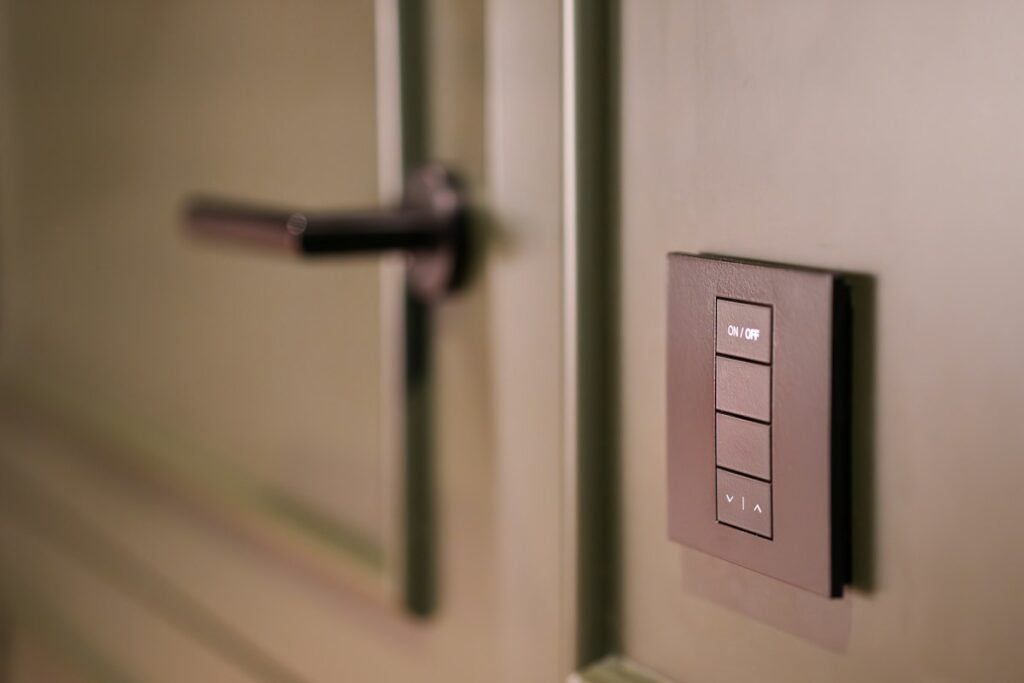
Smart switches, app-controlled dimmers and LED lighting can make a home or office more comfortable and cheaper to run. But a smart upgrade only feels “smart” when it is planned around the wiring you actually have. These are the points our electricians check before installing any smart lighting control.
Check for a neutral at the switch
Most smart switches need a permanent power supply to keep their electronics and wireless connection running. That usually means a neutral conductor at the switch position. Many older installations only run a switched live to the switch, with the neutral staying at the light fitting. Some products are designed for “no-neutral” installations, but they can cause LED lamps to glow or flicker when switched off. An electrician can confirm what is behind your switch plates and recommend compatible devices.
Match dimmers to LED loads
Traditional dimmers were designed for filament lamps that draw much more power. Modern LED lamps draw very little, so an old dimmer may flicker, buzz or not dim smoothly. Choose LED-compatible dimmers, check the minimum and maximum load ratings, and make sure the lamps themselves are marked as dimmable.
Think about wireless coverage
Smart switches rely on a reliable signal. Thick walls, metal back boxes and long distances from the router can make devices drop offline. Plan the system around your network, or choose devices that use a hub or mesh protocol designed for building-wide coverage.
Plan the layers of light
Smart control works best with a well-designed scheme: ambient light for the room, task light where you work or cook, and accent light to add depth. Grouping these on separate circuits gives you flexible scenes — bright for cleaning, soft for evenings — without rewiring later. Our lighting installation service starts with exactly this kind of plan.
Keep safety in the design
- Use back boxes deep enough for the smart switch module — cramming conductors behind a switch can damage insulation.
- Keep outdoor and bathroom devices rated for the location.
- Make sure circuits are protected by suitable RCD or RCBO devices.
- Label any circuit that now feeds smart controls so it can be isolated safely.
Is it worth upgrading?
For most properties, yes — especially when combined with an LED retrofit. Lower energy use, convenient scheduling and fewer lamp replacements quickly add up. The key is getting the groundwork right so the system is dependable for years.
Planning a lighting or smart switch upgrade? Get in touch with Spark Volt Pro for a survey and a clear written quote.